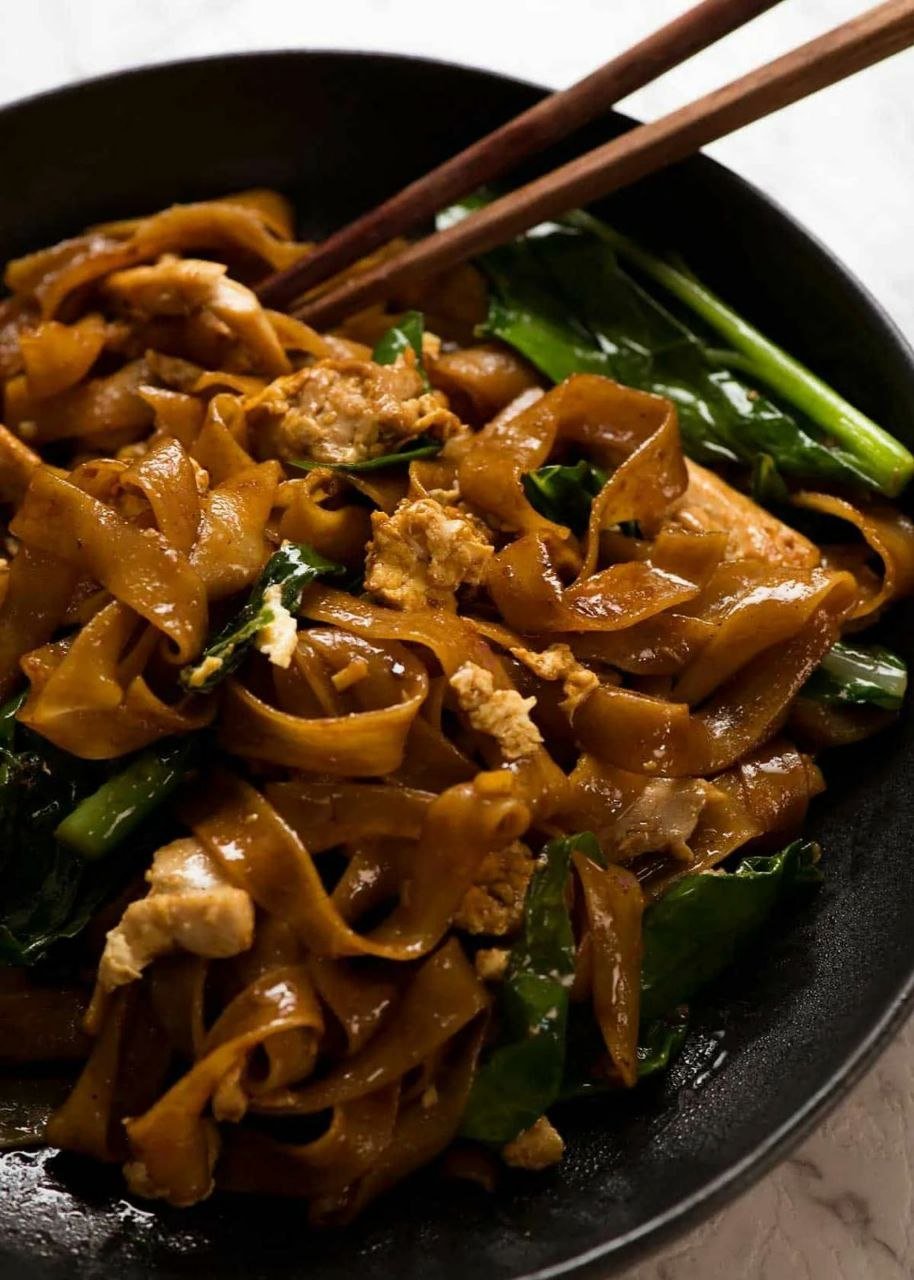
Pad See Ew (Thai Stir Fried Noodles)
Instructions
- Prepare the Noodles: If using fresh wide rice noodles, gently separate them by hand or by briefly microwaving them for 30-60 seconds to make them pliable. If using dried noodles, follow package directions for rehydration, typically soaking in warm water until pliable, then draining well. Once separated, toss the noodles with 1 tablespoon of neutral oil to prevent sticking. Set aside.
- Marinate the Protein: In a medium bowl, combine the thinly sliced chicken (or tofu), 1 teaspoon light soy sauce, 1/2 teaspoon white pepper, and 1 teaspoon cornstarch. Toss to coat evenly. Let marinate for at least 15 minutes while you prepare other ingredients.
- Prepare the Sauce: In a small bowl, whisk together the oyster sauce, dark soy sauce, light soy sauce, fish sauce, white sugar, 1/2 teaspoon white pepper, and water or chicken broth. Stir until the sugar is dissolved. Set aside.
- Pre-cook Chinese Broccoli (Optional but Recommended): For tender-crisp Gai Lan, you can briefly blanch it. Bring a small pot of salted water to a boil. Add the Chinese broccoli and blanch for 30-60 seconds until bright green. Immediately transfer to an ice bath to stop cooking, then drain well. This ensures the stalks are tender without overcooking the leaves during stir-frying. Skip this step if you prefer a firmer texture.
- Heat the Wok/Skillet: Heat a large wok or a very large, heavy-bottomed skillet over high heat until it just begins to smoke. This high heat is crucial for achieving “wok hei.”
- Cook the Protein: Add 1 tablespoon of neutral oil to the hot wok. Add the marinated chicken (or tofu) in a single layer and spread it out. Let it sear undisturbed for 1-2 minutes until browned on one side, then stir-fry for another 2-3 minutes until cooked through. Remove the cooked protein from the wok and set it aside.
- Scramble the Egg: Add the remaining 1 tablespoon of neutral oil to the wok. Pour in the lightly beaten egg. Let it set for a few seconds, then scramble it with your spatula until cooked through but still soft. Push the scrambled egg to one side of the wok.
- Sauté Aromatics: Add the minced garlic (and sliced chilies, if using) to the empty side of the wok. Stir-fry for about 15-30 seconds until fragrant, being careful not to burn the garlic.
- Add Chinese Broccoli: Add the Chinese broccoli to the wok. Stir-fry for 1-2 minutes until tender-crisp (if not pre-blanched, cook longer until desired tenderness is reached).
- Introduce the Noodles: Add the prepared wide rice noodles to the wok. Pour the prepared sauce mixture over the noodles and vegetables.
- Stir-Fry Vigorously: Using two spatulas or tongs, quickly and vigorously toss and fold the noodles, protein, vegetables, and egg together. Ensure all components are evenly coated with the dark, glossy sauce. Continue stir-frying for 2-4 minutes, allowing some of the noodles to get a slight char, which contributes to the “wok hei” flavor.
- Taste and Adjust: Taste the Pad See Ew and adjust seasonings if necessary. You might add a touch more sugar for sweetness, fish sauce for umami, or light soy sauce for saltiness.
- Serve Immediately: Transfer the hot Pad See Ew to serving plates. Serve immediately and enjoy!
Cooking Tips and Variations
To achieve the best Pad See Ew, attention to detail and high heat are key. First and foremost, ensure your wok or skillet is screaming hot before adding any ingredients. This is the secret to “wok hei,” the smoky, charred flavor that makes stir-fries truly exceptional. Don’t overcrowd the pan; if your wok isn’t large enough, cook the protein and noodles in separate batches to maintain high heat and prevent steaming. When working with wide rice noodles, fresh ones are always preferred for their superior texture. If using dried, rehydrate them carefully according to package instructions, ensuring they are pliable but not mushy, and drain them thoroughly. Tossing them with a little oil before stir-frying prevents them from sticking together.
For variations, the protein is easily interchangeable. Instead of chicken, try thinly sliced beef, succulent shrimp, or even a combination. For a vegetarian or vegan option, firm or extra-firm tofu is an excellent choice, soaking up the rich sauce beautifully. You can also experiment with other vegetables. While Chinese broccoli is traditional, bok choy, snap peas, or even bell peppers can be added for extra color and crunch. If you like heat, don’t shy away from adding more bird’s eye chilies or a dash of chili oil at the end. For a richer flavor, a small amount of pork lard can be used instead of neutral oil, especially when cooking the noodles. Finally, for an extra layer of flavor, consider adding a pinch of white pepper to the finished dish just before serving, as it complements the savory notes wonderfully.
Storage and Reheating
Pad See Ew is best enjoyed fresh off the wok, when the noodles are perfectly tender-crisp and the flavors are at their peak. However, leftovers can be stored and reheated, though the texture of the noodles may become slightly softer.
To store, allow the Pad See Ew to cool completely to room temperature. Transfer it to an airtight container and refrigerate for up to 2-3 days. Avoid leaving it at room temperature for more than two hours to ensure food safety.
For reheating, the best method is to use a microwave or a skillet. If using a microwave, place the Pad See Ew in a microwave-safe dish, add a tablespoon or two of water or chicken broth, and cover loosely. Heat on medium power for 1-2 minutes, stirring halfway through, until heated through. The added liquid helps to rehydrate the noodles and sauce, preventing them from drying out.
Alternatively, for a slightly better texture, reheat in a skillet or wok over medium-high heat. Add a small amount of oil to the pan. Once hot, add the leftover Pad See Ew along with a splash of water or broth. Stir-fry quickly for 2-3 minutes, breaking up any clumps, until the noodles are heated through and slightly re-crisped. Be careful not to overcook, as this can make the noodles mushy. Serve immediately after reheating.
Frequently Asked Questions
What kind of noodles are best for Pad See Ew?
The best noodles for Pad See Ew are fresh wide rice noodles, often labeled as “Ho Fun” or “Sen Yai.” These flat, broad noodles have a soft, chewy texture and are excellent at absorbing the rich sauce. If fresh noodles are unavailable, dried wide rice noodles can be used, but ensure they are rehydrated properly according to package instructions to prevent them from breaking apart or becoming too sticky during stir-frying.
Can I make Pad See Ew vegetarian or vegan?
Absolutely! To make Pad See Ew vegetarian, simply omit the chicken and replace it with firm or extra-firm tofu, pressed and cut into cubes. For a vegan version, in addition to replacing the chicken with tofu, you will also need to substitute the oyster sauce with a vegetarian mushroom-based oyster sauce and replace the fish sauce with an equal amount of light soy sauce or a vegan fish sauce alternative. Ensure all other ingredients, like the dark soy sauce, are vegan-friendly.
How do I prevent the noodles from sticking together?
There are a few key tricks to prevent noodles from sticking. First, if using fresh noodles, gently separate them by hand or briefly microwave them for 30-60 seconds, then toss them with a tablespoon of neutral oil. If using dried noodles, make sure they are thoroughly drained after rehydration and also tossed with a little oil. Crucially, cook the noodles in a very hot wok or skillet and avoid overcrowding the pan. Cook in batches if necessary, and keep the noodles moving constantly during the stir-frying process to prevent them from clumping together.