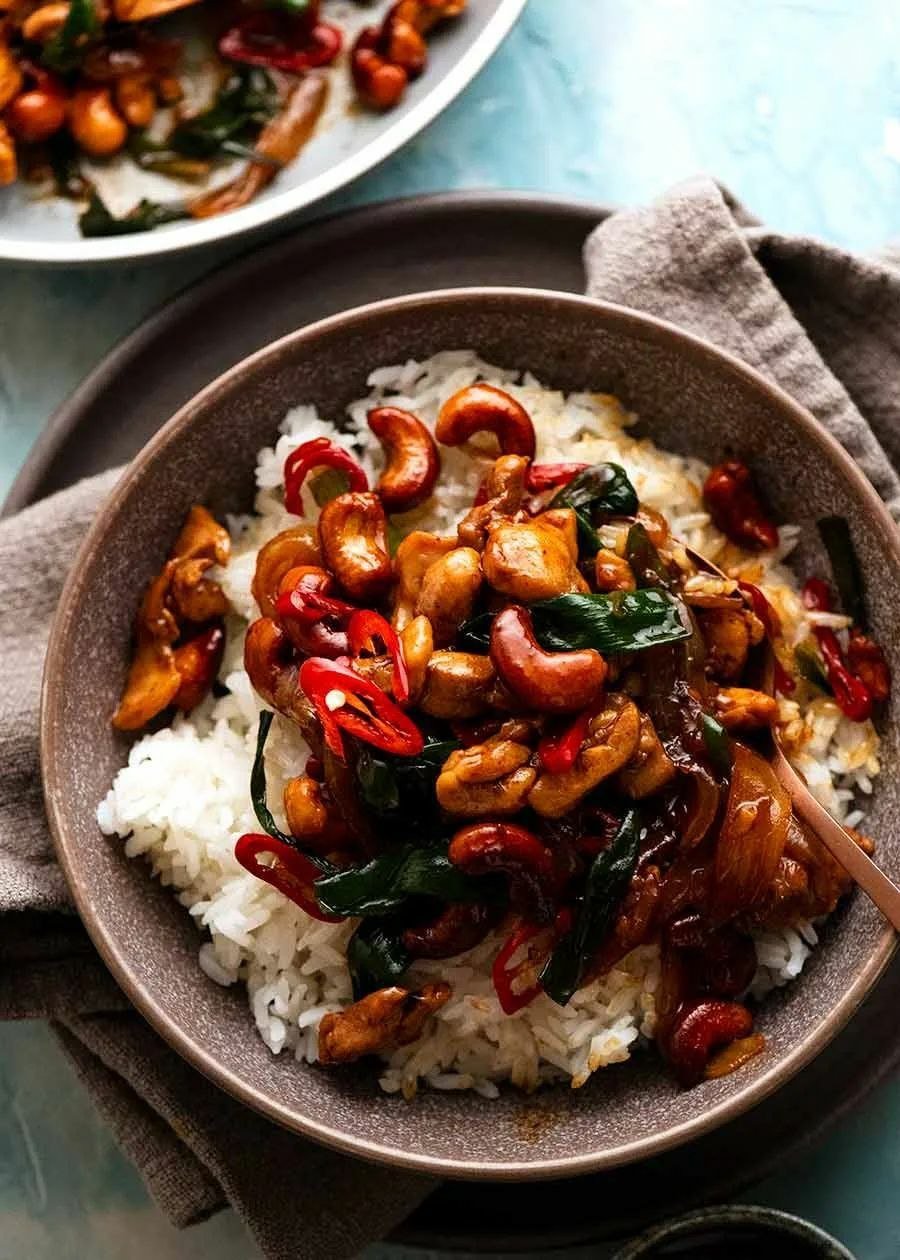
Thai Cashew Chicken Stir Fry
Instructions
- Prepare the Chicken: Pat the chicken pieces dry with paper towels. In a medium bowl, toss the chicken with cornstarch until evenly coated. This step helps create a light coating that crisps up when cooked and thickens the sauce.
- Prep the Cashews: If using raw cashews, spread them on a baking sheet and toast in a preheated oven at 350°F (175°C) for 5-7 minutes, or until lightly golden and fragrant. Watch carefully to prevent burning. If using pre-roasted cashews, you can skip this step or lightly toast them in a dry pan for a minute to enhance flavor. Set aside.
- Make the Sauce: In a small bowl, whisk together the chicken broth, oyster sauce, soy sauce, brown sugar, rice vinegar, and sesame oil. Set aside.
- Cook the Chicken: Heat 1 tablespoon of vegetable oil in a large wok or a heavy-bottomed skillet over high heat until shimmering. Add half of the chicken in a single layer, ensuring not to overcrowd the pan. Cook for 3-4 minutes, turning occasionally, until golden brown and cooked through. Remove the cooked chicken to a plate and repeat with the remaining chicken and another tablespoon of oil if needed.
- Sauté Aromatics and Vegetables: Add another tablespoon of vegetable oil to the wok if necessary. Add the chopped onion and bell peppers. Stir-fry for 3-4 minutes until they begin to soften but still retain a slight crispness.
- Add Garlic, Ginger, and Chilies: Push the vegetables to one side of the wok. Add the minced garlic, grated ginger, and dried red chilies (or red pepper flakes) to the empty side. Stir-fry for 30 seconds until fragrant, being careful not to burn the garlic. Toss everything together.
- Combine and Sauce: Return the cooked chicken to the wok with the vegetables. Give the prepared sauce a quick whisk again and pour it over the chicken and vegetables. Bring the sauce to a gentle simmer, stirring constantly, for 1-2 minutes until the sauce thickens and coats all the ingredients.
- Add Cashews: Remove the wok from the heat and stir in the toasted cashews.
- Serve: Serve immediately over hot jasmine rice. Garnish with fresh cilantro, sliced green onions, or extra cashews if desired.
Cooking Tips and Variations
To truly master this Thai Cashew Chicken Stir Fry, a few key techniques and considerations will elevate your dish from good to absolutely outstanding. First and foremost, “mise en place” is your best friend when stir-frying. This French culinary term means “everything in its place,” and it’s critical here. Have all your ingredients chopped, measured, and ready to go before you even turn on the stove. Stir-frying is a rapid cooking method, and you won’t have time to chop an onion or measure out soy sauce once the wok is hot. This preparation ensures a smooth, stress-free cooking process and prevents anything from burning.
Another crucial tip is to ensure your wok or skillet is screaming hot before you add any ingredients. High heat is essential for achieving that characteristic stir-fry char and for cooking ingredients quickly without making them soggy. When cooking the chicken, resist the urge to overcrowd the pan. If you add too much chicken at once, the temperature of the pan will drop, and the chicken will steam instead of sear, resulting in a less desirable texture. Cook the chicken in batches, removing each batch to a plate before adding the next. This ensures beautiful browning and tender, juicy chicken.
For the cashews, toasting them is non-negotiable for the best flavor and crunch. Whether you’re using raw or pre-roasted cashews, a quick toast in a dry pan or a few minutes in the oven will deepen their nutty flavor and make them extra crispy. Just be sure to watch them closely, as they can burn quickly. Add them at the very end of the cooking process to maintain their crunch; adding them too early will make them soft.
Don’t be afraid to customize the spice level. The dried red chilies provide a lovely warmth and subtle heat. If you prefer a milder dish, use fewer chilies or remove the seeds. For more heat, add an extra chili or two, or include a pinch of red pepper flakes. You can also add a dash of Sriracha or chili garlic sauce to the finished dish for an extra kick. The beauty of homemade food is tailoring it to your personal preference.
When it comes to vegetables, this recipe is incredibly flexible. While bell peppers and onions are classic choices, feel free to experiment with what you have on hand or what’s in season. Broccoli florets, snap peas, carrots (sliced thinly), baby corn, or even sliced mushrooms would all be delicious additions. Just be mindful of their cooking times; harder vegetables like carrots or broccoli might need a minute or two head start in the wok before adding the quicker-cooking ones. If using leafy greens like bok choy or spinach, add them in the last minute of cooking so they wilt but don’t become overcooked and mushy.
For a vegetarian or vegan variation, substitute the chicken with firm or extra-firm tofu. Press the tofu well to remove excess water, then cut it into cubes. Toss the tofu with cornstarch and pan-fry until golden and crispy before adding it back with the sauce. Ensure you use a vegan oyster sauce alternative (often made from mushrooms) and vegetable broth instead of chicken broth. This swap makes for a delightful plant-based meal that’s equally satisfying.
Finally, always taste and adjust the sauce before serving. A stir-fry sauce is a delicate balance of sweet, savory, and tangy. If it needs more saltiness, add a splash more soy sauce. If it’s too salty, a little more brown sugar or a squeeze of lime juice can help. A touch more rice vinegar can brighten the flavors if it tastes a bit flat. This final adjustment ensures your Thai Cashew Chicken is perfectly seasoned to your palate.
Storage and Reheating
This Thai Cashew Chicken Stir Fry makes for excellent leftovers, making it a fantastic option for meal prep. To store, allow the stir-fry to cool completely to room temperature. Transfer it to an airtight container and refrigerate for up to 3-4 days. It’s best to store the stir-fry separately from any cooked rice you might have, as rice can dry out or become hard when stored together.
When you’re ready to reheat, there are a couple of good options to maintain the quality of the dish. For best results, especially if you want to retain some of the crispness of the vegetables and the bite of the chicken, reheat in a skillet or wok over medium heat. Add a tablespoon of water or chicken broth to the pan with the stir-fry to help create some steam and prevent it from drying out. Stir occasionally until heated through, about 5-7 minutes. If the sauce seems a bit thin, you can let it simmer for an extra minute to reduce slightly.
Alternatively, you can reheat individual portions in the microwave. Place the stir-fry in a microwave-safe dish, cover it loosely to allow steam to escape (this helps prevent splattering and retains moisture), and microwave on high for 1-2 minutes, stirring halfway through, until heated thoroughly. Be aware that microwave reheating might make the cashews less crispy and the vegetables a little softer, but it’s a convenient option for a quick meal. If you want to revive the cashews’ crunch, you can lightly toast a few fresh ones and sprinkle them over your reheated portion.
Freezing this dish is generally not recommended. While the chicken and sauce would freeze fine, the vegetables (especially bell peppers and onions) tend to become very soft and watery after thawing and reheating, losing their desirable texture. The cashews would also lose their crunch. It’s best enjoyed fresh or from the refrigerator within a few days.
Frequently Asked Questions
What kind of chicken is best for stir-fry?
Boneless, skinless chicken breasts or thighs both work wonderfully for stir-fries. Chicken breasts tend to be leaner and cook very quickly, while chicken thighs offer a richer flavor and stay more tender, making them more forgiving if slightly overcooked. Whichever you choose, cut them into uniform 1-inch pieces to ensure even cooking.
Can I make this stir-fry less spicy?
Absolutely! The spice in this recipe primarily comes from the dried red chilies. To reduce the heat, simply use fewer chilies, or omit them entirely. You can also remove the seeds from the chilies before adding them, as the seeds contain most of the capsaicin. For a very mild version, you can substitute the dried chilies with a tiny pinch of red pepper flakes or just rely on the flavor of the other ingredients.
What can I use if I don’t have oyster sauce?
Oyster sauce provides a unique savory, slightly sweet, and umami depth that is hard to perfectly replicate. However, if you don’t have it, you can substitute it with a combination of hoisin sauce and a touch more soy sauce. Hoisin sauce offers a similar sweetness and thickness, though it has a distinct flavor profile. For a vegetarian or vegan option, look for mushroom-based “vegetarian oyster sauce” which is widely available in Asian markets and many grocery stores.
How can I make my stir-fry vegetables crisp-tender?
The key to crisp-tender vegetables in a stir-fry is high heat and quick cooking. Ensure your wok or pan is very hot before adding the vegetables. Don’t overcrowd the pan; cook vegetables in batches if necessary so they sear instead of steam. Stir-fry them just until they are bright in color and slightly softened but still have a bite to them. Adding them too early or cooking them for too long will result in limp, mushy vegetables.